

Jamaica's 300 MW Renewable Tender Opens Major Market for Developers
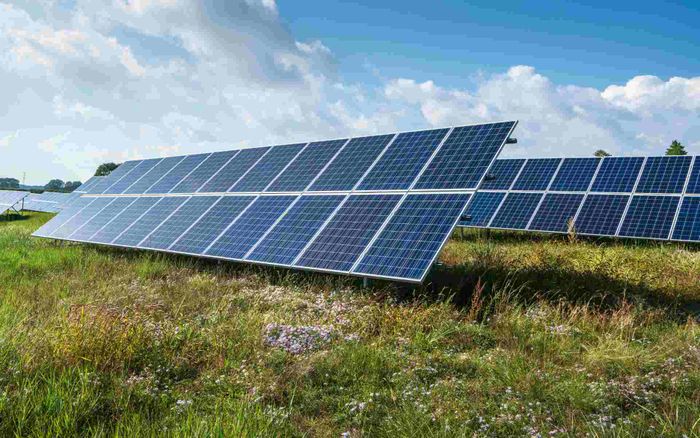
The initiative comes amid a coordinated push across Caribbean markets to deploy utility-scale power generation and advanced storage solutions to reduce electricity costs and shield local economies from external fuel volatility. These opportunities will take center stage at Caribbean Energy Week (CEW) 2027, taking place July 13–15 in Georgetown, Guyana, where policymakers, utilities, regulators, global technology developers and financiers will meet to evaluate investment pipelines, procurement frameworks and bankable project models.
Guyana Scales Solar and Energy Storage Networks
Jamaica’s procurement strategy mirrors broader energy transition initiatives underway across the region. In Guyana, clean energy deployment is guided by the updated Low Carbon Development Strategy (LCDS) 2030, which outlines a framework to achieve 100% renewable electricity generation by 2040.
As part of its phased transition, Guyana plans to lift the share of solar photovoltaic systems in its isolated interior grids to an average of 50% by 2027 and 70% by 2030. Backed by the Guyana Solar Energy Program under the Guyana-Norway partnership via the Guyana REDD+ Investment Fund, the nation is backing intermittent power with dedicated storage assets. Reaffirming this focus, on October 30, 2026, the Guyana Energy Agency issued an invitation for bids for the supply and delivery of 32 lithium battery energy storage systems to modernize decentralized networks.
Barbados Turns to Storage to Stabilize Supply
Barbados and Suriname are deploying capital into storage capacity and rural electrification models. Barbados, which has already established 100% domestic electricity access, has mandated that 50% of its electricity supply originate from renewable resources by December 2027, before transitioning to a 100% clean power matrix by 2030. To maintain grid stability, the island nation estimates an operational requirement of 125 MW of battery storage capacity by 2027. The government is currently procuring 60 MW of utility-scale storage via a competitive bidding round, with an additional 65 MW of storage capacity advancing through planning stages.
Suriname Targets Off-Grid Connections
In Suriname, the national commitment to achieve a 35% installed renewable capacity share by 2030 is driving off-grid and remote power investments. State power utility N.V. Energiebedrijven Suriname has launched an international tender covering the design, supply and installation of solar PV-BESS mini-grids and associated water infrastructure across 26 to 30 rural communities. These investments run parallel to deployments under the Village Photovoltaic Microgrid Project and the multi-agency Just Energy Transition Joint Program, broadening clean energy access beyond the coastal urban corridor.
Collectively, these programs reflect a regional push to accelerate renewable energy deployment, strengthen energy security and affordability, expand electricity access and build grid resilience. The transition is also creating employment, investment and partnership opportunities for international energy companies and technology providers.
Against this backdrop, CEW will convene stakeholders across the Caribbean’s renewable energy and power sectors to explore the policies, infrastructure, financing and partnerships needed to accelerate project development.
For more information, visit www.caribbeanenergyweek.com.
To register, visit www.caribbeanenergyweek.com/attend.
To sponsor, visit www.caribbeanenergyweek.com/sponsor.